
Overview
The divine gifts, elven tutelage, and independent rise of human kingdoms.
What Happened
The gods gazed upon the havoc wrought by the War of a Thousand Tears. The world of Amra was left ravaged and scarred, its people scattered and divided. The dwarves retreated to their mountain cities, and the elves, though they expanded and colonized various regions, could not repopulate the world alone. As eternal beings, they bore few offspring.
Witnessing the desolation, Ethoras, the wise and compassionate god, resolved to bring forth a new race to restore balance and prosperity to Amra. With great care, he drew forth the essence of humanity from the depths of his divine heart. To this new creation, Ethoras gave the perseverance of the dwarves, the grace of the elves, and a spark of his own divinity to complete the design.
The other gods, seeing the potential in Ethoras' creation, bestowed upon humanity their own gifts. Nithra, goddess of magic and knowledge, granted them the intelligence to master the arcane arts, while Brom, god of the forge, imbued them with the skill to shape metal and stone. Honos, god of honor, instilled within them a compassionate soul, and Necis, god of war, endowed them with a fighting spirit.
Maeve, goddess of music and the arts, gifted humanity with boundless creativity and passion. She taught them to sing, dance, and paint, allowing them to express their emotions and enrich their lives through art. With this passion, they would explore and expand throughout the world.
Basaj, the god of nature, granted humanity the ability to understand and master the natural world, teaching them to cultivate the land, tame beasts, and use nature's resources to their advantage, all while maintaining a deep respect for life and balance. Odine, goddess of the sea and sky, taught humans to navigate the vast oceans and build boats capable of braving the waves and winds.
Adate, the goddess of lies and illusions, saw the need for cunning and deceit in the ruthless world of Amra. She taught humans the art of intrigue, the power of information, and the skill to hide their intentions when necessary. Secretly, Erio, god of death, made humans mortal and susceptible to pain and disease, to teach them the value of their existence and the importance of living each moment fully.
As the gods completed their work, the race of humans was born and set forth to inhabit the land of Amra. The elves, intrigued by the potential of this new race, took humans under their wing, teaching them the basic skills to survive, while keeping their most powerful secrets hidden. Grateful, the humans eagerly accepted their guidance.
But as generations passed, the humans began to question the authority of their elven teachers and sought knowledge beyond what they were willing to share. Some rebelled, exploring Amra to find their own destinies. This desire for independence led to tensions between the races and the formation of alliances, as well as conflicts between humans and elves, and humans and dwarves.
Throughout history, conflicts between the races were a recurring theme. Notable episodes include the Battle of Argonath, where humans and elves fought over ancestral territory, and the conflict in Tel'Areth, when humans invaded elven lands in search of resources. These battles left indelible marks on Amra's history, shaping the relationships between races for generations to come.
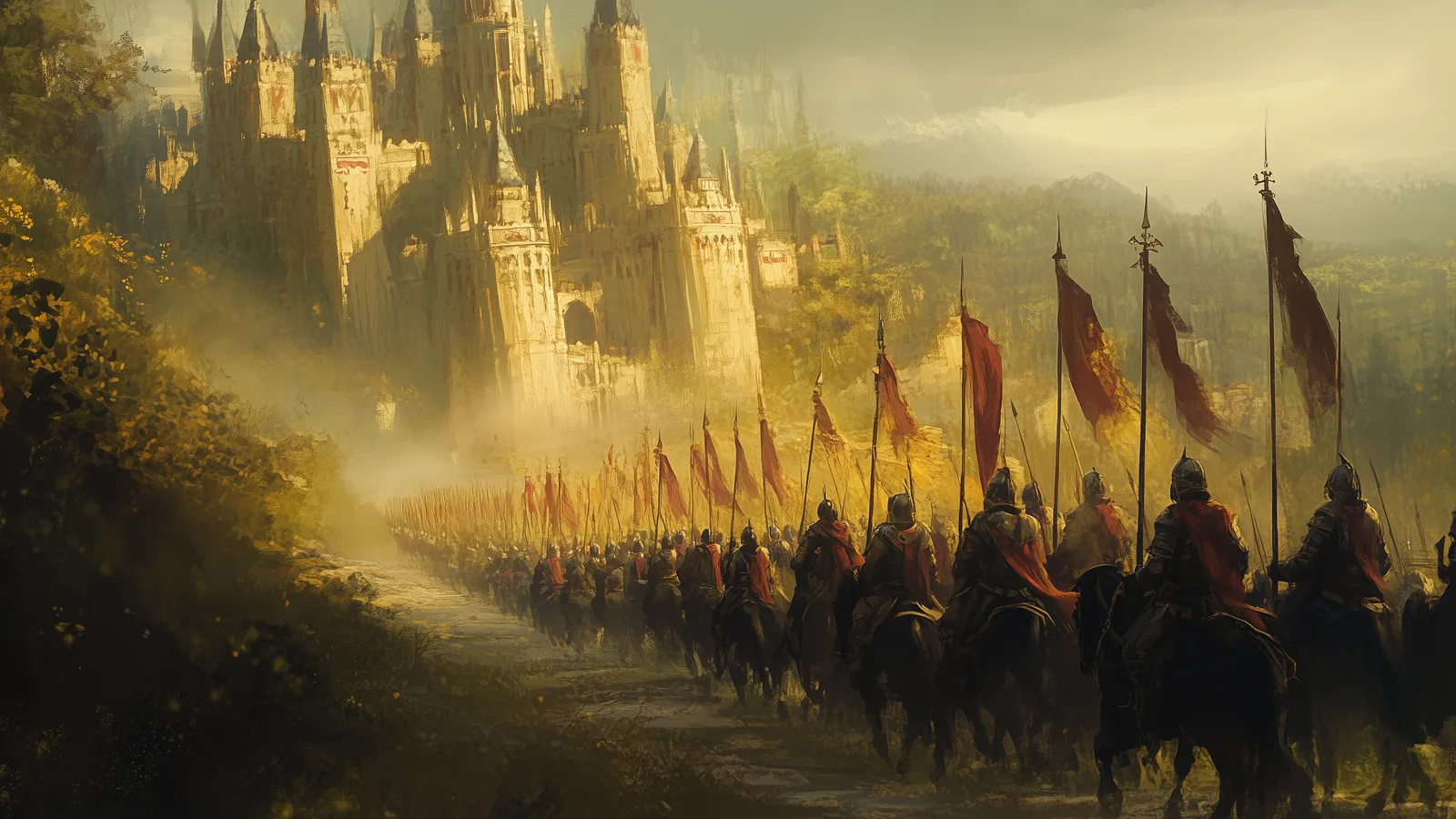
In this age of humans, the world of Amra continued to evolve and transform. As the humans expanded across the land, they built thriving cities and kingdoms, becoming a force to be reckoned with. Their ambition and drive brought them into contact with other races, sometimes leading to conflict, but also creating opportunities for cooperation and growth.
In the face of adversity, the different races found common ground, forging alliances and forming bonds that transcended their differences. Through these connections, they learned from one another and shared their knowledge, enriching the tapestry of Amra's culture and society.
The elves, who had once viewed humans as mere experiments, began to see the value in the unique qualities that humanity possessed. They recognized the resilience and adaptability of the human spirit, and the extraordinary potential that lay within each individual.
Likewise, the dwarves, who had initially been wary of the humans' ambition and propensity for conflict, found much to admire in their resourcefulness and determination. The humans' capacity for innovation and craftsmanship resonated with the dwarves, and the two races found common cause in their love of creating and building.
As Amra continued to heal from the wounds of the War of a Thousand Tears, the world began to flourish once more. New civilizations rose, and old ones were reborn, as the diverse races learned to coexist and work together for the greater good.
This age of humans marked a pivotal moment in the history of Amra, a turning point that would set the course for the future of the world. Though challenges and conflicts still arose, the bonds that had been forged between the races would prove to be enduring and strong.
As the sun set on this new era, the gods looked upon the world they had shaped and the races they had nurtured. They saw the beauty and harmony that had arisen from the struggles of the past, and they knew that their work was not in vain.
For in the age of humans, Amra had been reborn, its destiny forever changed by the actions of its people and the indomitable spirit that defined them. And though the future remained uncertain, one truth was clear: the world of Amra would continue to evolve and grow, its tapestry woven from the threads of countless stories and the dreams of those who dared to imagine what could be.
The Capitulations of the Hundred Nights
In the shadows of a conflict that had ravaged Amra for years, the leaders of Tel'Donor, Tel'Dovan, and Tel'Areth convened to address the escalating tension between elves and humans. With the monstrous creatures from The Peaks of the Draken encroaching upon their lands, and whispers of the dragons' return unsettling the hearts of every denizen of Amra, the urgency of the situation could not be ignored.
The regents of the elven kingdoms, Gaeladrian Korianthos, Naiadriel Eglaneth, and Arathiel Aelarion, gathered to discuss a momentous proposal. They contemplated ceding a portion of their lands to the humans, allowing them to expand eastward and establish a realm of their own. In exchange, the humans would be entrusted with the defense of these lands and forge an alliance between the kingdoms of elves, humans, and dwarves to face the imminent threat of dragons.
During the arduous negotiations of The Capitulations of the Hundred Nights, opinions clashed and tempers flared. Each regent championed their own vision for the future of the eastern lands.
Arathiel Aelarion, the stoic regent of Tel'Areth, vehemently opposed granting any elven territories to the humans. He believed that such a concession would only attract more formidable foes to Amra's borders and insisted on finding an alternative solution.
Gaeladrian of Tel'Dovan, however, saw potential in human expansion. The opportunities for cultural exchange and trade enticed him, leading him to advocate for the ceding of some eastern lands.
Naiadriel Eglaneth of Tel'Donor tread a more moderate path, seeking a compromise that would respect both elven and human interests. She agreed to part with some of the land, provided that the humans honored elven borders and refrained from meddling in their affairs.
As the debates raged on, rumors of skirmishes and conflicts between the elven representatives spread like wildfire. The Capitulations of the Hundred Nights eventually culminated in the temporary separation of Tel'Areth from its sister kingdoms, Tel'Donor and Tel'Dovan, easing the tensions between the elven nations.
Despite Tel'Areth's refusal to recognize the treaty, new borders between the human and elven realms were established, and they vowed to maintain a relationship of respect and cooperation with the House Dawnspear.
The Dawnspear lineage, a noble human house rooted in the mountainous territory of Aregor, was assigned the responsibility of governing the newly minted lands soon to be known as Castell. This appointment was a direct result of the House's prestigious reputation, particularly the heroic actions of their leader, Arin Dawnspear, during a tumultuous conflict between humans and elves. It was Drogan Silverbeard, a dwarf of Dhon Toruhm well-acquainted with the human kingdoms, who recommended the Dawnspears, considering their martial prowess and diplomatic acumen.
To bolster the stability of the emergent kingdom, the dwarves from Dhon Toruhm were summoned to oversee the execution of the agreement. Eager to reconnect with the wider world after lengthy epochs of isolation, the dwarves deployed their expertise in the formation of the Triumvirate of Castell.
This coalition involved the noble families of Castell, the elven kingdom of Tel'Dovan, and the dwarven realm of Dhon Toruhm. Under this system, each noble family of Castell was allotted a representative from Tel'Dovan, designated as the Master of Magic, and a representative from Dhon Toruhm, titled the Master of Defenses.
Whilst some elves elected to depart the continent, many chose to remain in Castell to help the humans settle their new lands and mediate disputes with their neighbors in Tel'Areth. In an enduring state of vigilance, they also maintained watch over the ominous Peaks of the Draken.
Amid an environment of strife and uncertainty, the Triumvirate of Castell was born. This unprecedented alliance of humans, elves, and dwarves was determined to navigate the hazardous currents of political intrigue and potential conflict while defending their lands from the monstrous creatures at their borders.
As the wheel of time turned, the lands of Castell flourished under the judicious and equitable rule of House Dawnspear. Guided by the Masters of Magic and Defenses, Castell managed to create a delicate balance of power in the region, ensuring peace and stability for its populace.
Cultural exchange among the inhabitants of Castell and their elven and dwarven allies enriched the kingdom, fostering a sense of unity and understanding that eclipsed the confines of race and heritage. As the years progressed, the bond of friendship and trust between the three realms grew stronger, fortifying the Triumvirate of Castell against external threats.
Although the shadow of the dragons cast a significant dread in the hearts of the people of Amra, the unity of elves, humans, and dwarves stood as a beacon of hope and resilience. Together, they faced the impending challenges, resolved to protect their lands and safeguard the future of their people.
The establishment of the Triumvirate of Castell would be remembered in the annals of history as a powerful testament to unity and cooperation amid adversity. The legacy of the Accords of the Broken Spears and the brave regents who pioneered a path toward peace would resonate, inspiring future generations.
Lasting Consequences
This event still affects politics, religion, ruins, bloodlines, and the way scholars explain danger in the present age. Its relics and unresolved wounds can surface as diplomatic pressure, sacred duty, inherited guilt, or a forgotten threat returning from beneath the official histories.
Campaign Use
- Use this entry to anchor ruins, prophecies, noble claims, or old enemies in a specific age.
- Let modern factions disagree over what the event means and who has the right to inherit its legacy.
- Connect discoveries from this period to nearby region, god, species, or faction entries.