
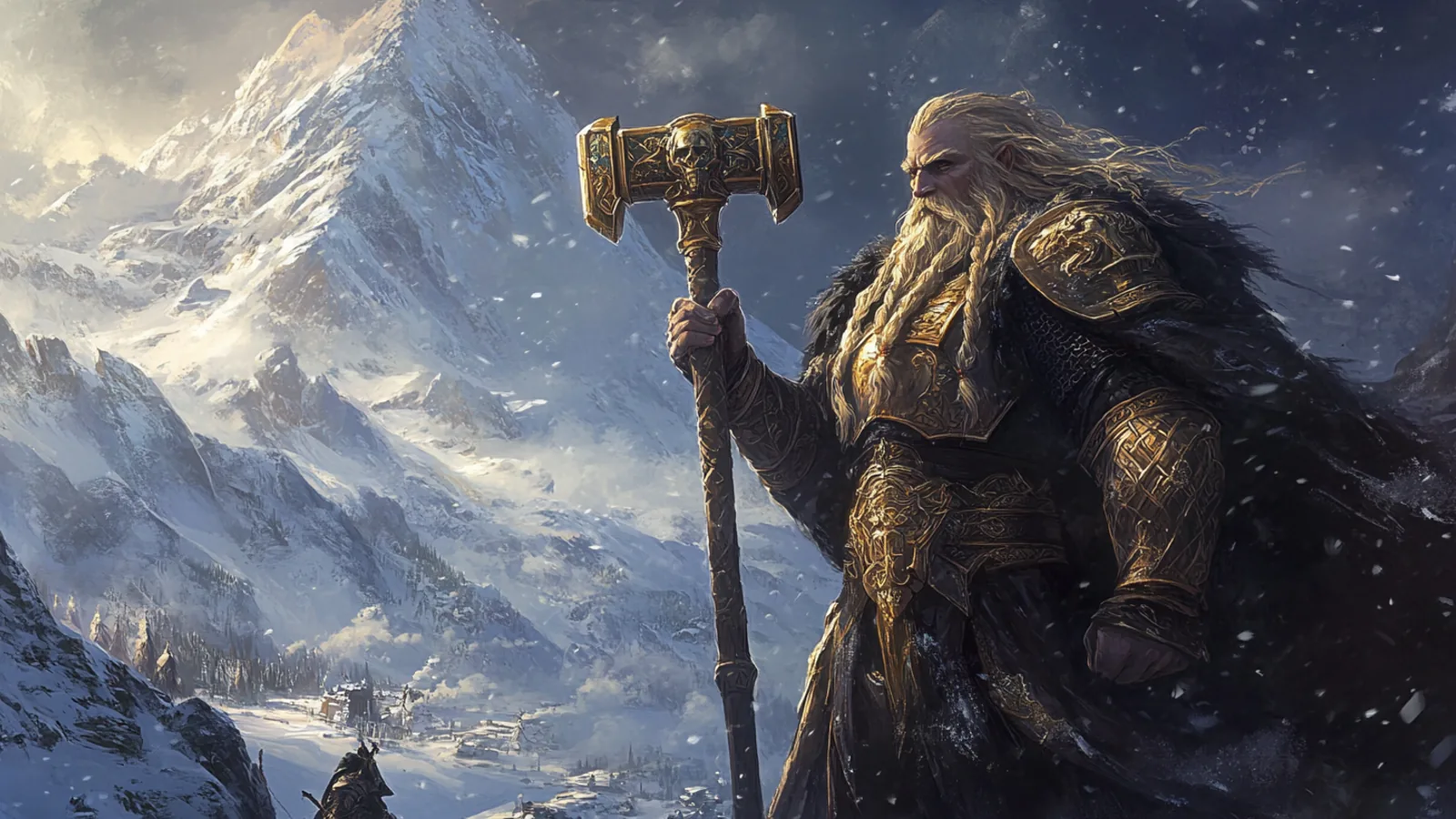
Overview
The rise of the dwarven peoples from titan blood and the founding of their mountain kingdoms.
What Happened
In the twilight of the cataclysmic Black Blood War, the world of Amra was forever altered, giving rise to a multitude of creatures and races. Among these diverse beings, similarly to their bigger kin, the giants, the first dwarves took form, born from the very blood of fallen titans. Hardy and robust, they drew the gaze of Brom, the god of the forge and metallurgy, who discerned great potential within them and conferred his blessings and wisdom upon their stout shoulders.
Under Brom's divine tutelage, the dwarves honed their skills as peerless miners and craftsmen, mastering the arts of stone and metal with unparalleled finesse. They coalesced into tight-knit clans and tribes, burrowing deep into Amra's bedrock to carve out vast subterranean cities, labyrinthine tunnels, and caverns that reached into the very heart of the world.
As the dwarves flourished and expanded, they found themselves embroiled in bitter disputes over territory and resources. Torum Stonebeard, one of the wisest and most influential dwarves, advocated for the unification of the tribes beneath a single banner. Thus, he established the kingdom of Dhon Toruhm, with its capital nestled in the north of Amra, shielded by the formidable Mountains of White Ice.
Here, the dwarves sculpted grand cities both above and below the surface, chiseling the very rock itself into imposing fortifications. Yet not all dwarves acquiesced to the rule of Dhon Toruhm, electing instead to retain their autonomy and chart their own destinies.
In due course, two additional dwarf kingdoms emerged: Dhon Vondaral, situated in the eastern lands and renowned for its maritime prowess and mercantile wealth; and Dhon Mendor, nestled to the northeast of the Dusk Mountains, famed for its intrepid explorers and erudite scholars. Despite their differences, the three dwarf kingdoms maintained amicable relations, engaging in trade and banding together to defend their realms against shared adversaries. Centuries later, the kingdom of Dhon Kopjar was founded when dwarves of the Ironfist clan decided to explore new untamed lands.
The dwarves forged alliances with diverse beings such as giants and filborgs, treants and furies, and together they waged war against the menace of the chromatic dragons. Although the dwarves and their allies suffered grievous losses, they showcased their indomitable courage and martial skill. In the wake of these tumultuous battles, the three dwarf kingdoms continued to bolster their defenses, steeling themselves for the trials yet to come.
The dwarves were not solely focused on warfare and metallurgy; they also crafted intricate trade and communication routes throughout Amra, linking their subterranean and surface cities through clandestine paths and tunnels. These routes were zealously guarded by the dwarves, divulged only to their own kin or trusted allies. In this way, the dwarves wove a sprawling trade network that spanned the continent, facilitating the exchange of goods and wisdom among their diverse settlements and clans.
Though they had suffered devastating setbacks in their conflict with the chromatic dragons, the dwarves swore to remain vigilant and continue to fortify their ranks, learning from their adversaries and adapting to hardship.
Each of the three dwarf kingdoms honed their unique specialties and expertise, laboring tirelessly to safeguard and nurture their lands and people. Dhon Toruhm pursued ever-greater heights in forging and mining, Dhon Vondaral broadened its mercantile and navigational reach, and Dhon Mendor delved further into exploration and the acquisition of knowledge.
Throughout the centuries, the dwarves of Amra and their allies learned to unite and collaborate in the face of the myriad threats that plagued their world. The alliance forged in the crucible of battle against the chromatic dragons endured, binding races and nations together in the pursuit of peace and security across the continent.
The saga of the dwarves in Amra is one of valor, tenacity, and unyielding resolve.
Lasting Consequences
This event still affects politics, religion, ruins, bloodlines, and the way scholars explain danger in the present age. Its relics and unresolved wounds can surface as diplomatic pressure, sacred duty, inherited guilt, or a forgotten threat returning from beneath the official histories.
Campaign Use
- Use this entry to anchor ruins, prophecies, noble claims, or old enemies in a specific age.
- Let modern factions disagree over what the event means and who has the right to inherit its legacy.
- Connect discoveries from this period to nearby region, god, species, or faction entries.