
Overview
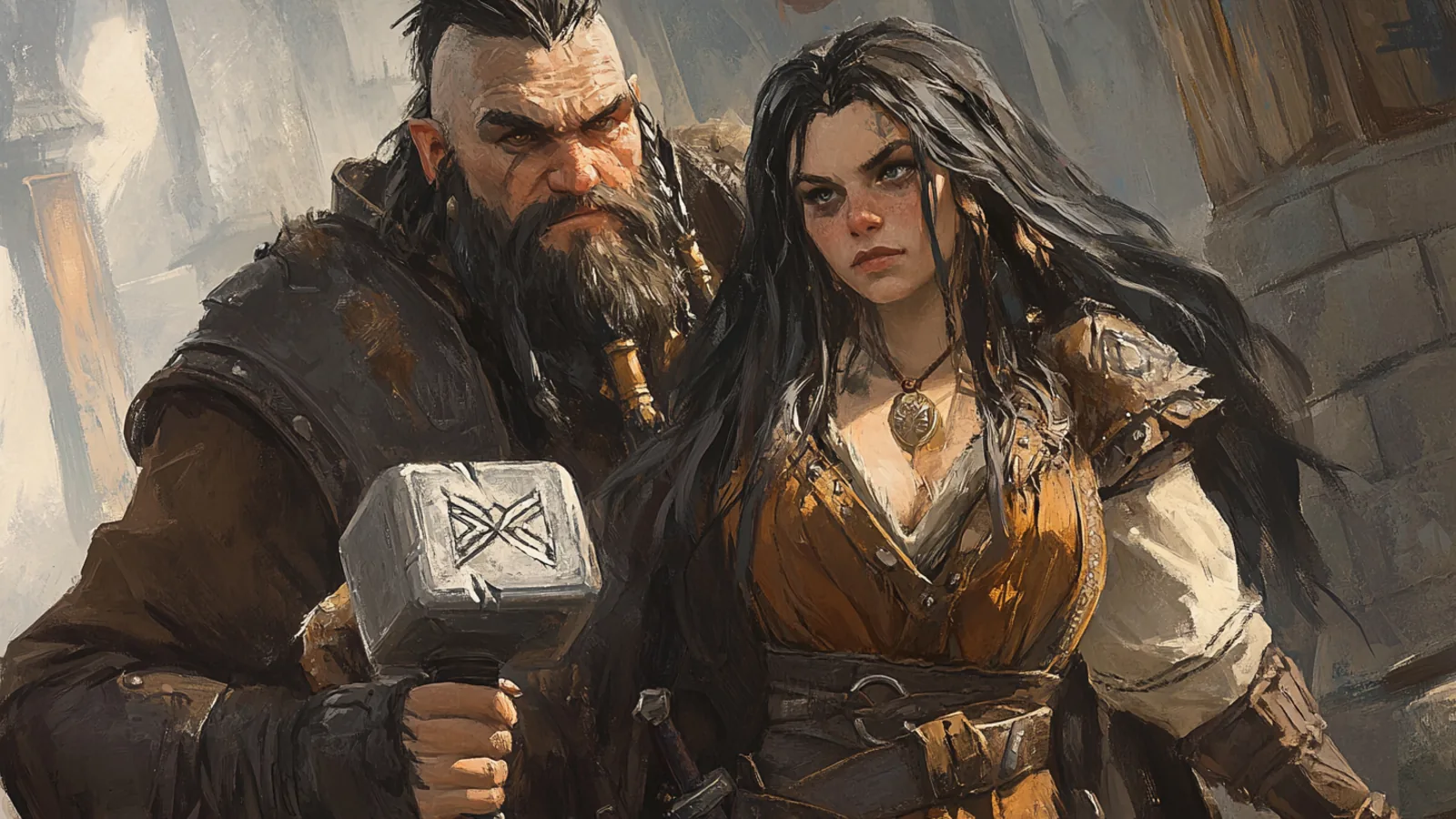
Dwarves are steadfast, tenacious, and widely adapted across Amra. Their cultures value endurance, craft, memory, and practical expertise, but no single dwarven lifestyle defines them all. Mining, diplomacy, survival, navigation, stonework, and trade all have honored places in dwarven society.
Most dwarves mature slowly, live for centuries, and carry the bodily resilience expected of people whose oldest stories begin under mountain weight and torchlight. Even surface communities keep some relationship with darkness, stone, or buried ancestry.
How Dwarven Lineages Work
Dwarven sub-species are best treated as ecology plus culture. A Mountain Dwarf, Hill Dwarf, Wasteland Dwarf, Coastal Dwarf, and Grey Dwarf may share ancestry, but they inherit different obligations, tools, enemies, and assumptions about what a proper home should be.
Dwarven Sub-Species
Mountain Dwarves
Mountain Dwarves come from towering peaks and deep ranges where ancestral homes are carved directly into living rock. Their halls are not merely shelters; they are records of lineage, craft, conquest, and grief. Stone columns, gem-veined chambers, and fortified galleries tell visitors exactly who built them and who was kept out.
They are protective of their realms and renowned for metallurgy, gemcraft, armor, and heavy weapons. In play, Mountain Dwarves make excellent heirs to sealed gates, keepers of old grudges, or specialists called in when a relic's mineral history matters as much as its magic.
Hill Dwarves
Hill Dwarves live among rolling hills and fertile valleys, often in settlements that move easily between above-ground homes and underground structures. Their culture is known for adaptability, resourcefulness, trade, and diplomacy.
They maintain networks of roads, markets, and negotiated obligations that connect dwarven settlements to other peoples. A Hill Dwarf character may be a caravan speaker, treaty witness, merchant-priest, or quiet power broker whose family remembers every bargain made along a route.
Wasteland Dwarves
Wasteland Dwarves survive in deserts, steppes, badlands, and other hard country where resources are never taken for granted. Some live as nomadic tribes; others hold fortified enclaves around wells, mines, shrines, or trade crossings.
They are trackers, scouts, animal handlers, and survivalists. Their bond with the wild is practical rather than romantic: every beast, shadow, and wind shift may decide whether the clan sees another dawn. Use them when the campaign needs endurance, desert wisdom, or a guide who knows the price of every shortcut.
Coastal Dwarves
Coastal Dwarves settle rugged shorelines and windswept islands. Their communities blend cliffside architecture, harbor works, storm-resistant halls, and in some places underwater dwellings engineered against the sea's pressure and violence.
They are mariners, shipwrights, navigators, fishers, and bold explorers. Their culture connects dwarven craft to tide, sail, and salt. A Coastal Dwarf might know forgotten sea roads, build vessels no human yard could attempt, or carry stories from islands that other maps mark only with warnings.
Grey Dwarves
Grey Dwarves are reclusive subterranean dwarves who have separated from many surface kin. They live in dim caverns, winding tunnels, hidden enclaves, and fortified undercities where the living stone is both home and guardian.
They are miners, artisans, stealthy travelers, and readers of stonework. Their resilience against illusion and poison reflects a life spent among dangerous minerals, buried creatures, and old subterranean politics. A Grey Dwarf can bring the party into the deep places of Amra, but may also carry loyalties that surface courts do not understand.
Campaign Use
- Use dwarven sub-species to make stone, road, sea, and wasteland cultures feel distinct.
- Tie every dwarven character to a craft, route, stronghold, debt, or buried memory.
- Let conflicts between surface and subterranean dwarves reveal older fractures inside dwarven history.