
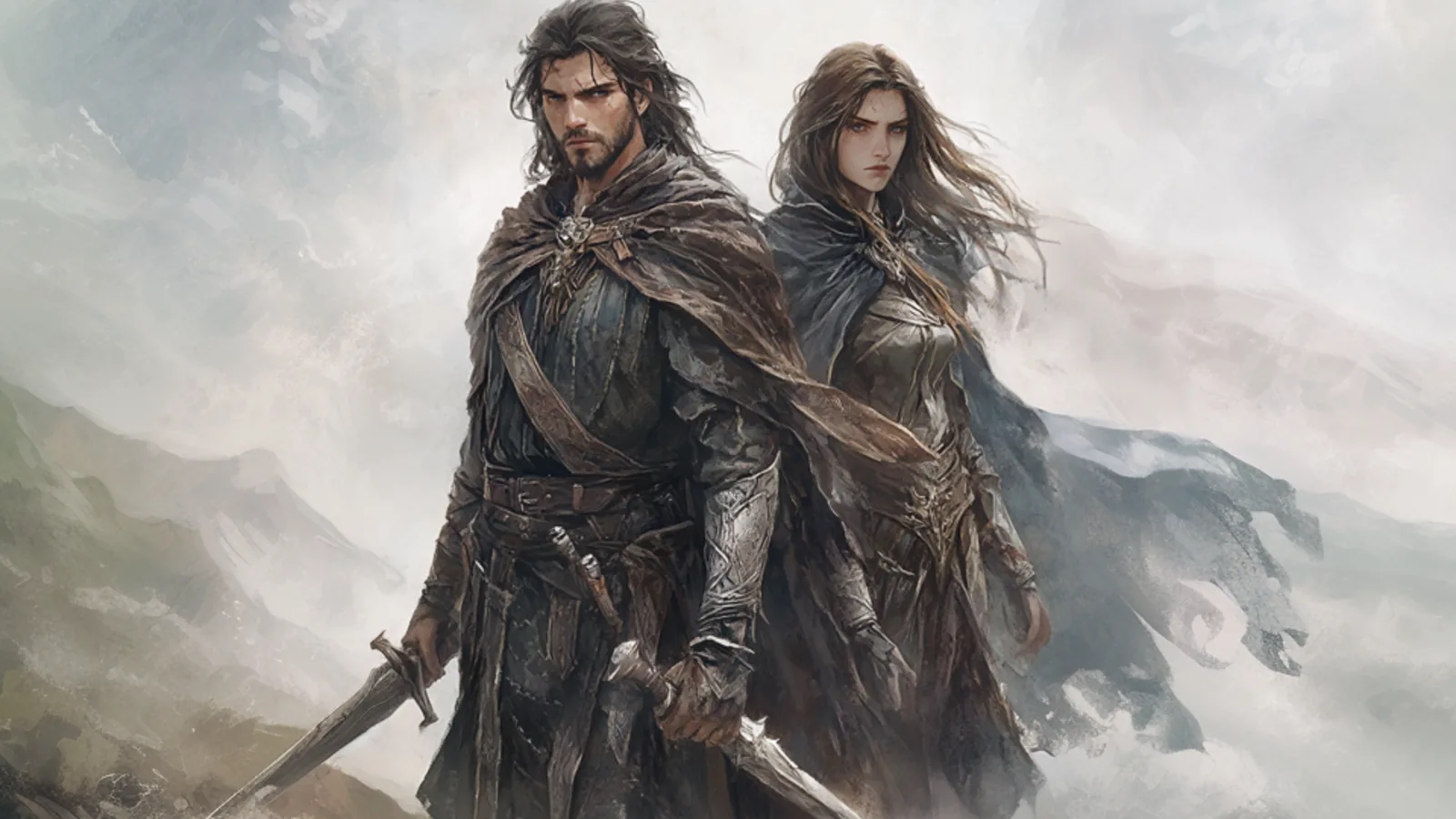
Overview
Humans are the most numerous and diverse people of Amra. Their differences are best understood as regional cultures rather than biological divisions. A human's homeland often implies training, worldview, allies, rivals, and expected duties.
Humans mature quickly compared with elves, dwarves, and gnomes. Their shorter lives often make them ambitious, adaptable, and politically disruptive. They build kingdoms, guilds, armies, ports, temples, and expeditions with a pace that older peoples sometimes admire and sometimes fear.
How Human Cultures Work
Human variants are regional identities. They describe what a homeland teaches its people to value: command, trade, endurance, craft, cunning, discipline, arcane study, winter survival, or indomitable courage.
Human Cultures
Castilian
Castilian humans are associated with battle, command, and martial leadership. Their culture prizes discipline, arms, battlefield reputation, and the ability to rally others when order begins to fail.
A Castilian character may be a knight, officer, veteran, banner-bearer, guard captain, or ambitious noble retainer. Use them when the story needs military duty, inherited honor, fortress politics, or the burden of leading people into danger.
Aregones
Aregones humans are shaped by trade, diplomacy, and courtly intelligence. They are merchants, translators, negotiators, patrons, and observers who know that a contract can win what an army cannot.
Their skill with language and insight makes them natural intermediaries between houses and foreign powers. In play, an Aregones background can bring commercial leverage, noble invitations, business rivals, or debts hidden inside polite correspondence.
Alkebuan
Alkebuan humans are resilient and closely connected to the natural world. Their cultures know hardship, endurance, wilderness travel, and the practical wisdom needed to survive beyond cultivated roads.
They are well suited to stories of clan duty, sacred landscape, harsh weather, and long journeys. An Alkebuan character may be a guide, hunter, healer, clan envoy, or survivor of a conflict that outsiders barely understand.
Tianzhnes
Tianzhnes humans are known for arts, crafts, tools, and disciplined skill. Their culture values the trained hand as much as the strategic mind, and many learn to see tools as extensions of family, school, and reputation.
They fit campaigns involving artisan houses, forged documents, masterwork commissions, engineering challenges, and social status built around craft. A Tianzhnes character may carry the honor of a workshop as seriously as another carries a noble name.
Banlayan
Banlayan humans are known for cunning, adaptability, and the ability to adjust quickly when circumstances turn. Their talents favor improvisation, sleight of hand, social reading, and flexible skills.
This culture is useful for characters who survive by wit: agents, travelers, performers, scouts, informants, and negotiators who prefer to keep several exits open. Banlayan hooks often begin when a clever solution creates a larger obligation.
Yamatian
Yamatian humans are marked by spiritual discipline, meditation, and religious tradition. Their cultures often value inner composure, ritual practice, and the ability to act decisively after contemplation.
They suit stories about clan duty, shrine obligations, martial restraint, and the tension between public honor and private conviction. A Yamatian character's daily discipline can be a source of strength, but also a chain.
Manajurian
Manajurian humans are associated with arcane study and magical education. They produce scholars, apprentices, ritualists, court mages, and experimenters whose abilities connect social ambition to magical learning.
Use Manajurian culture when the campaign needs magic as a civic institution rather than a lonely tower. A Manajurian character may owe favors to a school, carry a dangerous thesis, or know a cantrip that proves who trained them.
Skaptan
Skaptan humans are cold-hardy survivors of extreme climates. Their culture values endurance, practical judgment, and the ability to keep moving when weather, hunger, and fear punish hesitation.
They fit northern journeys, clan conflicts, winter sieges, monster hunts, and expeditions where survival is not background color but the central pressure of the story. A Skaptan may be blunt, but the bluntness often comes from knowing what delay costs.
Kievanian
Kievanian humans are known for bravery and indomitable persistence. Their traditions reward courage under fear, refusal to break, and loyalty that holds when easier choices appear.
They are natural soldiers, frontier wardens, rebels, and last-stand survivors. In play, a Kievanian character can embody the question of what courage costs after the song ends and the wounded must still be carried home.
Campaign Use
- Treat human culture as a direct route into regional politics.
- Let a human character's accent, tools, prayers, or military habits reveal where they learned to survive.
- Use short human lives to create urgency beside older lineages.