
Overview
The birth of goblinoids, the city of Drogmar, and the Crimson Pact that bound their tribes.
What Happened
In the wake of the Black Blood War, the cataclysm that birthed the stalwart dwarves and their kingdoms, Amra bore witness to the emergence of another set of beings, equal parts cunning and ferocious. Spawned from the blood of vanquished titans, intermingled with that of the dragons, the Goblinoids were given life, sired from the tumultuous clash of chaos and order that engulfed the land.
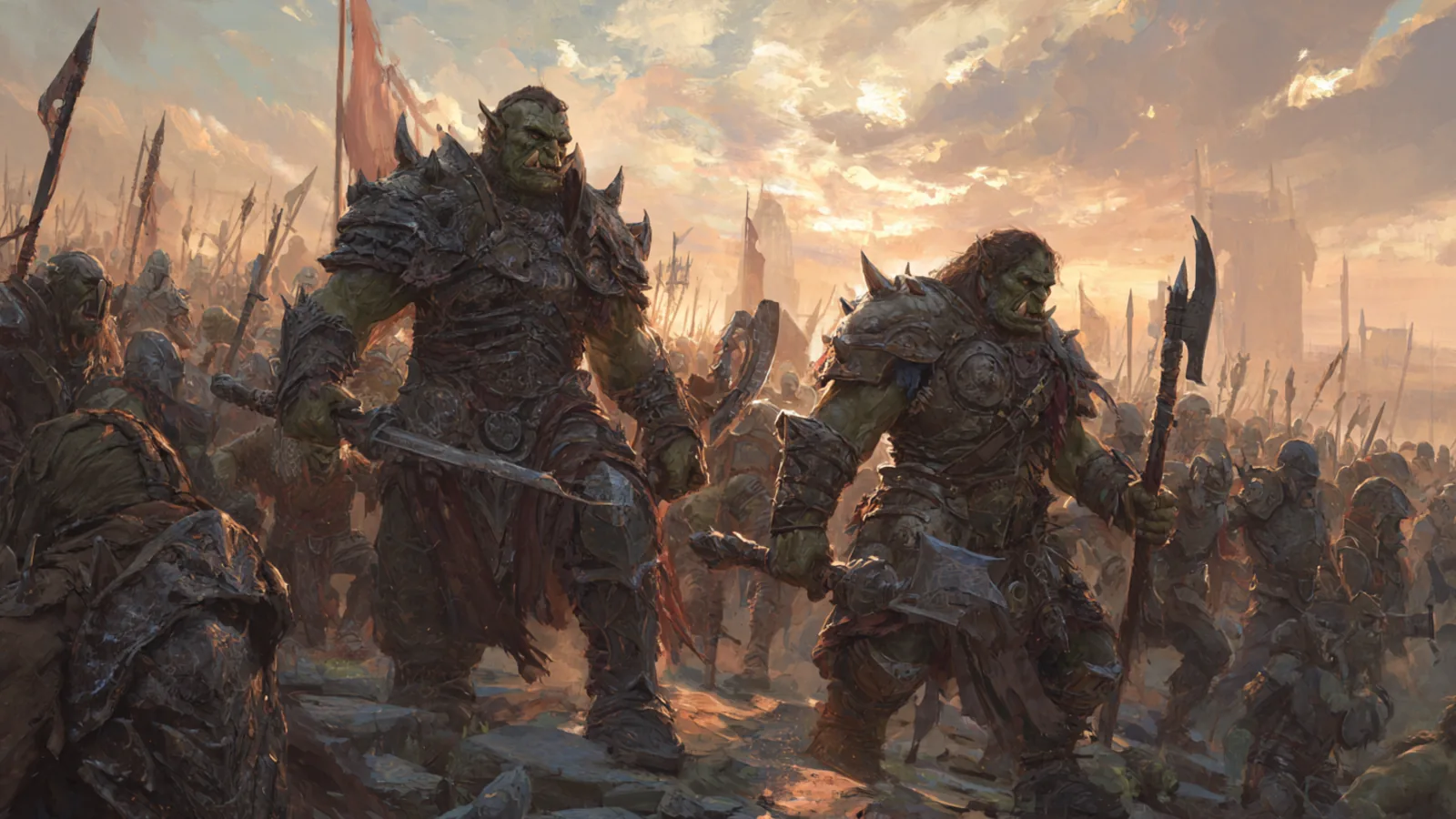
Among these newly birthed beings were the goblins, small and agile, with eyes that gleamed with cunning; the hobgoblins and orcs, disciplined and powerful, instilled with a keen sense of hierarchy and tactics; and the bugbears, hulking brutes of strength and stealth, capable of striking fear into the hearts of those who crossed their paths. The blood of the dragons that coursed within them granted the Goblinoids an affinity for the elements, and the titan's blood brought forth their innate connection to the world itself.
The Goblinoids were a diverse people, disparate in nature, bound by their shared birthright and the desire to carve their own destinies. In the desolate expanse of the Wastes of Orthis, they gathered in tribal societies, each developing their own customs and traditions. Among these tribes, the strongest and most cunning of the Goblinoids rose to power, their might and guile allowing them to dominate and unite the disparate groups.
In the crucible of hardship and strife, the tribes thrived, honing their skills in both martial and arcane prowess, their souls tempered by the elemental forces woven into their very essence. As the Goblinoids learned to harness the powers bestowed upon them, they attracted the attention of the gods.
Tartum, an aspect of Maeve, was the first to take notice of the burgeoning tribes. Intrigued by their innate guile and ruthlessness, Tartum sought to shape the Goblinoids in his own image, imparting his wisdom and craftiness to his new followers. In return, the Goblinoids revered Tartum as their patron deity, and with his guidance, they built the great city of Drogmar amidst the harsh and unforgiving wastes.
As the influence of Tartum permeated the Goblinoid society, they honed their abilities in stealth, subterfuge, and manipulation, expanding their reach across Amra, using their newfound cunning to seize power and resources for their people. The lands they conquered and the treasures they amassed only served to fuel their ambition, as the Goblinoids forged a sprawling empire that sprawled across the land.
In the shadows of their burgeoning empire, the Goblinoids clashed with other races, contesting for power and resources. Fueled by their potent blood and the divine guidance of Tartum, they engaged in both open conflict and clandestine subterfuge, using their innate cunning and elemental powers to great effect. Allies and enemies alike bore witness to the indomitable spirit and resilience of the Goblinoid races.
As the years turned to decades, the empire of the Goblinoids grew ever larger, encompassing vast swaths of Amra's diverse landscapes. Yet, with the growth of their territory came new challenges and the specter of internal strife. Power struggles and conflicts of interest emerged, threatening the unity that had once bound the tribes together.
Recognizing the threat to their empire's cohesion, the Goblinoid leaders convened a council, bringing forth the wisest and most cunning among their ranks. In the shadowy halls of Drogmar, they debated and plotted, devising a new order to ensure the stability and continuity of their people.
Thus was born the Crimson Pact, a complex web of alliances and obligations that bound the disparate tribes together in a single, unified force. With the Crimson Pact as their foundation, the Goblinoids worked together to strengthen their empire, focusing on the development of their cities, infrastructure, and military might. Each tribe contributed its unique skills and expertise, from the goblins' aptitude for alchemy and sabotage, to the hobgoblins' discipline and martial prowess, and the bugbears' brute strength and stealth.
Yet, the Goblinoids' relentless expansion and ambition did not go unnoticed by the other denizens of Amra. A sense of unease stirred among the races, as they recognized the growing threat posed by the empire of Drogmar. Alliances were forged, and great armies gathered to stem the tide of the Goblinoid advance, setting the stage for a conflict that would echo through the ages.
In the heart of the great war that erupted, the Goblinoids demonstrated their fearsome capabilities. The elemental fury woven into their blood ignited the battlefield, while the guile and cunning bestowed upon them by Tartum were unleashed upon their foes. Yet, against the combined might of the races of Amra, the Goblinoid empire began to falter, their momentum slowly waning.
Recognizing the shifting tide of war, the leaders of the Goblinoid tribes convened once more within the depths of Drogmar. With heavy hearts, they devised a new strategy to ensure the survival of their people. They sent emissaries to their adversaries, seeking an accord that would end the conflict and allow for coexistence.
The negotiations were fraught with tension and suspicion, yet eventually a truce was forged, one that saw the Goblinoid empire relinquish vast swathes of their conquered lands. In return, they were granted the right to self-governance and a place among the races of Amra.
Lasting Consequences
This event still affects politics, religion, ruins, bloodlines, and the way scholars explain danger in the present age. Its relics and unresolved wounds can surface as diplomatic pressure, sacred duty, inherited guilt, or a forgotten threat returning from beneath the official histories.
Campaign Use
- Use this entry to anchor ruins, prophecies, noble claims, or old enemies in a specific age.
- Let modern factions disagree over what the event means and who has the right to inherit its legacy.
- Connect discoveries from this period to nearby region, god, species, or faction entries.